Languages, from first words to IGCSE.
English is the language of learning at SBS Bangkok. Thai and Mandarin grow alongside it, from Early Years to Year 9 and beyond.
- English Cambridge English, with ESL support
- Thai Thai curriculum and Thai Studies
- Mandarin Taught by specialist teachers
- 2, often 3 Languages for every student
Multilingualism is a profound cognitive and professional advantage.
That is why languages run through every stage of SBS Bangkok, from songs and stories in Early Years to IGCSE preparation in Year 9.
Three languages, one school
Every child learns English. Thai and Mandarin are added in ways that fit each child’s background and stage, so every child is stretched.

English
Toddlers to Year 9
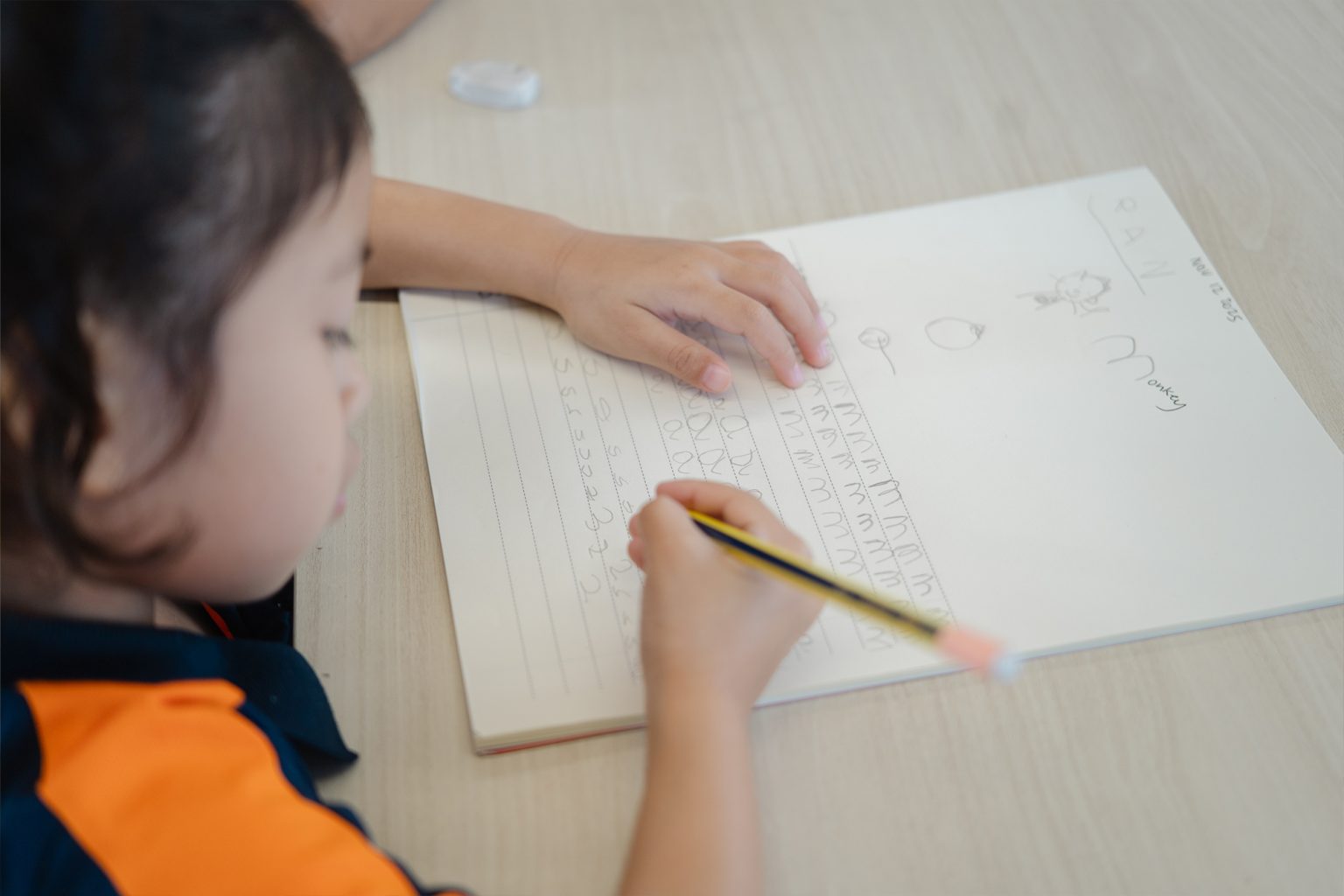
English is the language of learning. Phonics with Read Write Inc. starts in Early Years, and from Year 1 children follow Cambridge English or English as a Second Language, moving between the two as they progress.
- Weekly Library time and Reading for Pleasure
- English Extension or English Booster from Year 3
- First Language English IGCSE preparation in Year 9
Thai
Early Years to Year 9
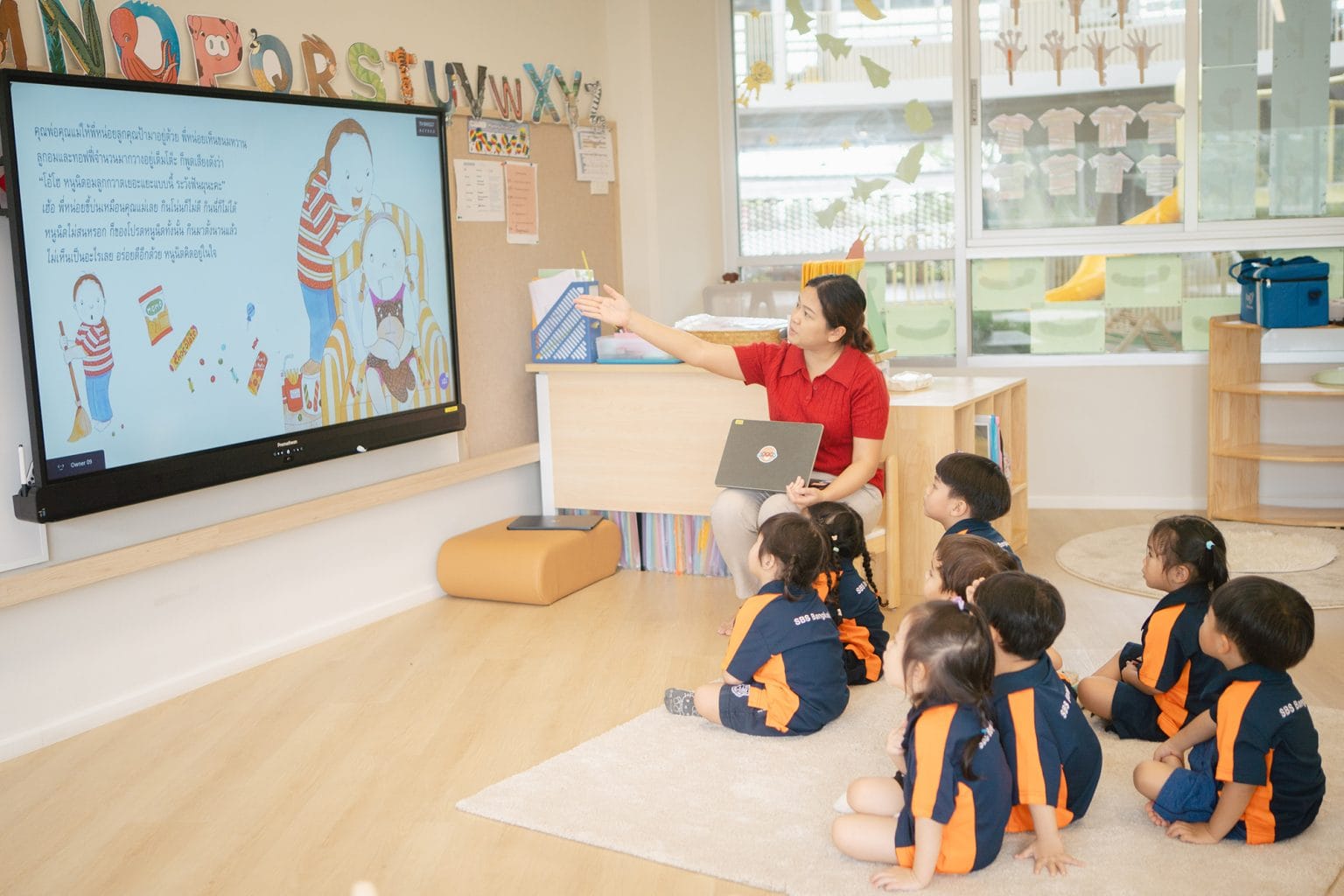
Thai follows the Thai Ministry of Education curriculum, with the ISAT course in Primary. Every child learns about Thai culture and history, and in Lower Secondary, Thai is compulsory for Thai nationals.
- Thai Culture and Language in Early Years
- Thai for every child in Years 1 and 2
- Thai Studies every week from Year 1
Mandarin
Early Years to Year 9
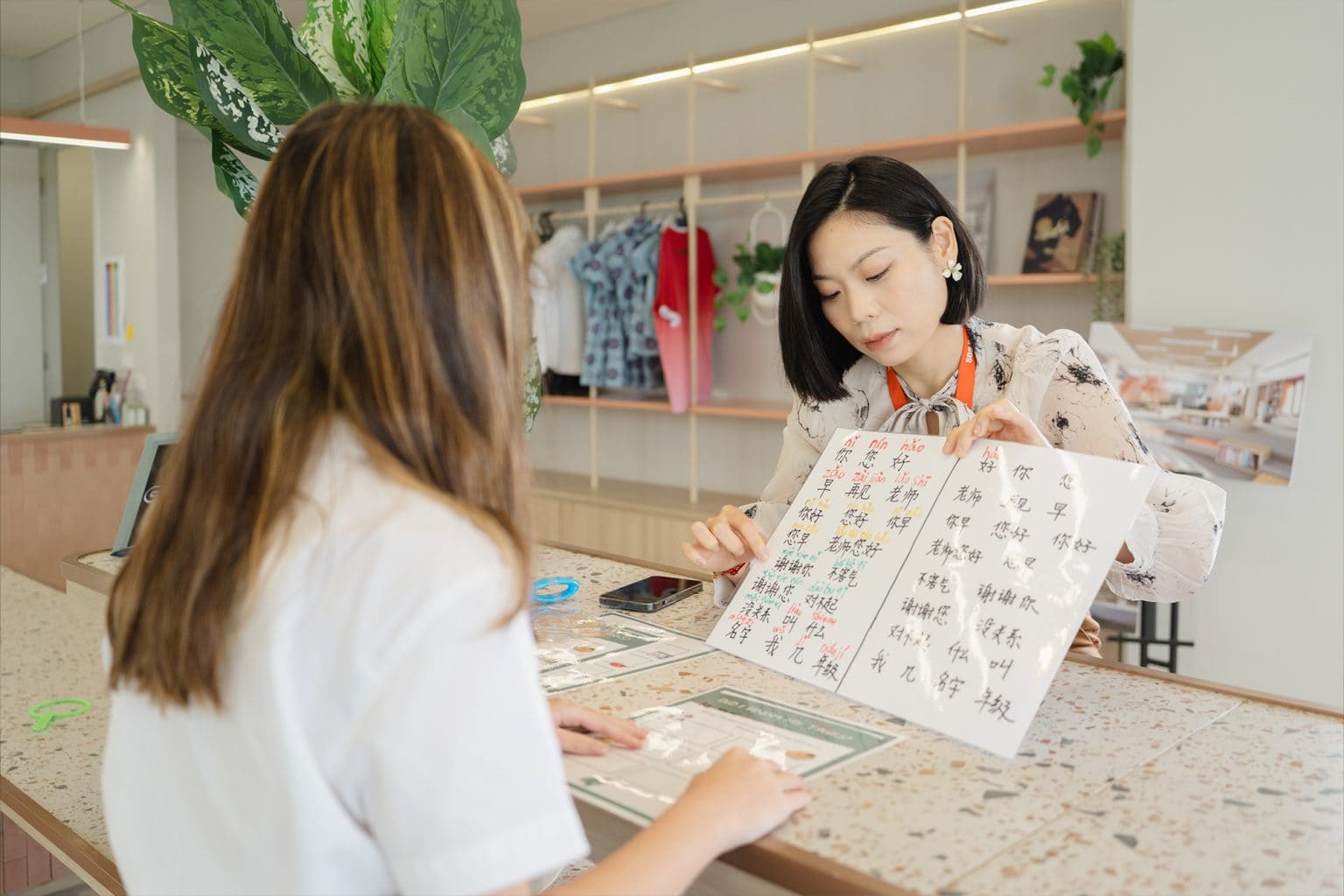
Specialist Mandarin teachers start in Early Years, joining inquiry lessons twice a week. Primary progress is benchmarked to HSK, and Lower Secondary follows the Cambridge Lower Secondary Mandarin curriculum.
- HSK 1 standards in Years 1 and 2
- Up to HSK 3 by Year 6
- Year 9 as a bridge to IGCSE Mandarin
Milestones to aim for
International benchmarks show how far each language has come, and what comes next.
-
HSK 1
The Mandarin benchmark for Years 1 and 2, built into play, songs and stories.
-
HSK 3
The level our Mandarin learners work towards by the end of Year 6.
-
IGCSE
Year 9 is the bridge to Cambridge IGCSE, in Mandarin and in First Language English.
Mandarin, through play
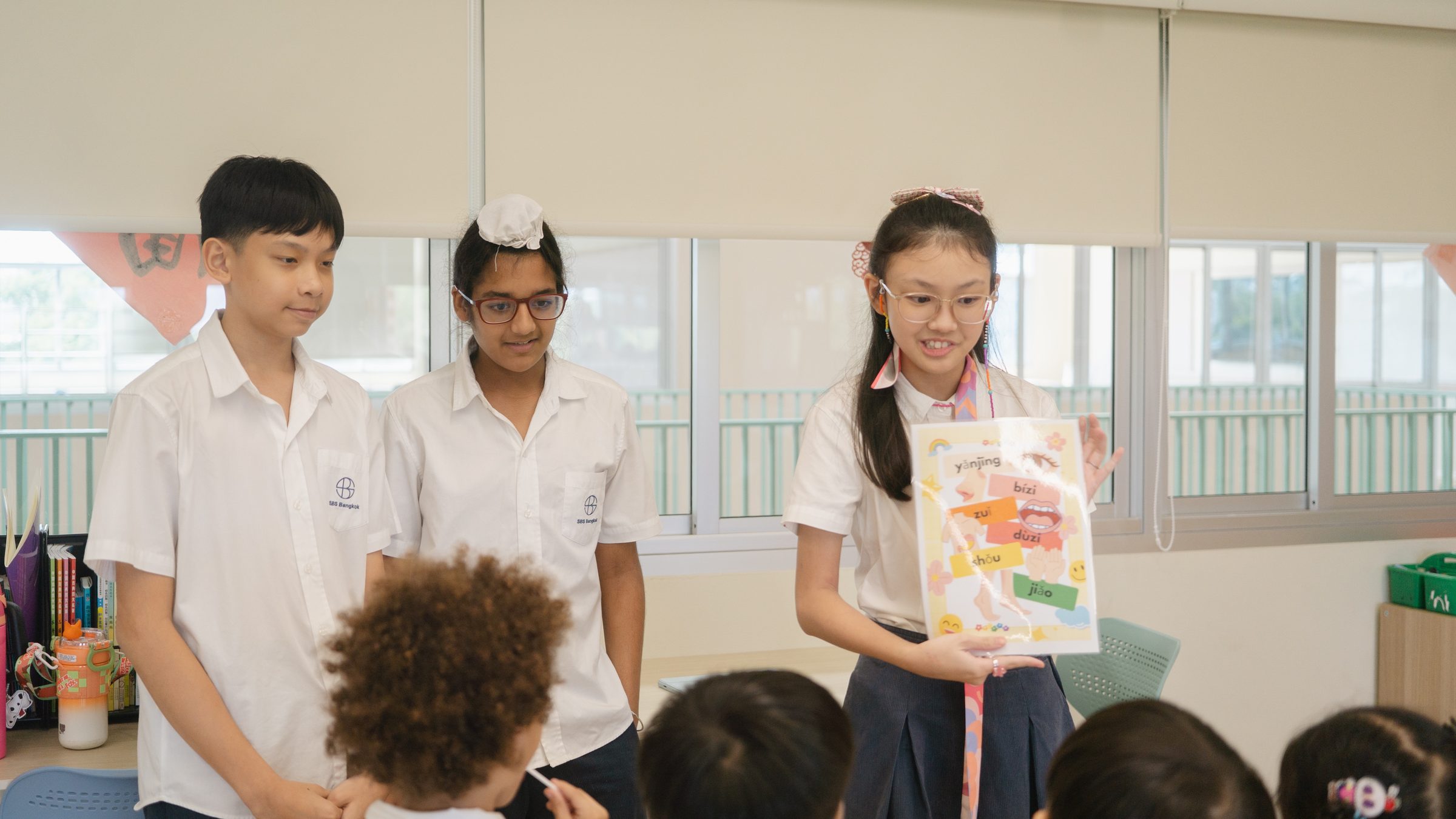
In Years 1 and 2 we move away from rote memorisation. Children learn through play, rhythm and visual storytelling, with HSK 1 as the benchmark.
- Speaking
The four tones
Tone exercises and daily classroom commands build oral fluency.
- Reading
First characters
Pictographic characters like mountain, water and sun, learned through art.
- Culture
Festivals
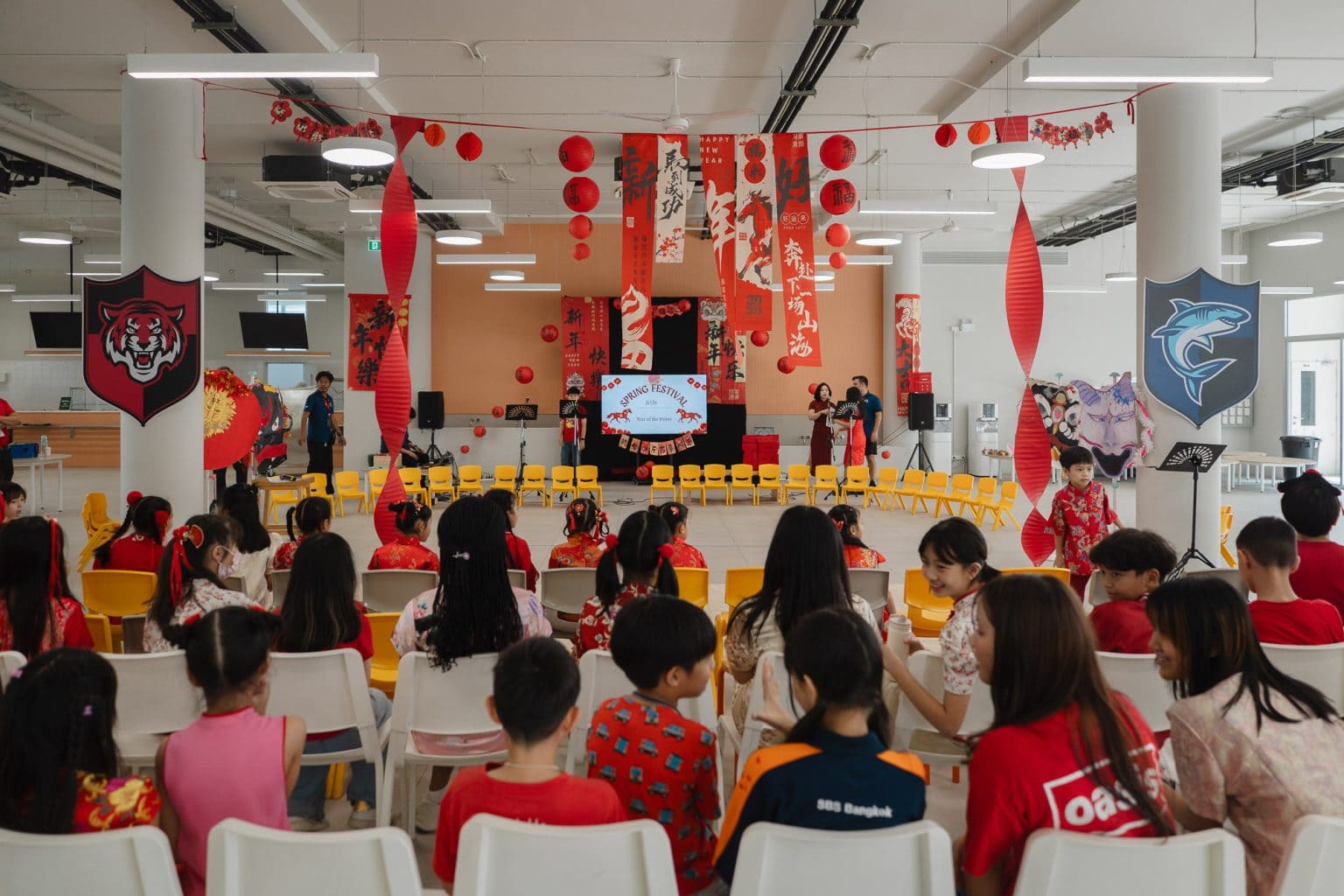
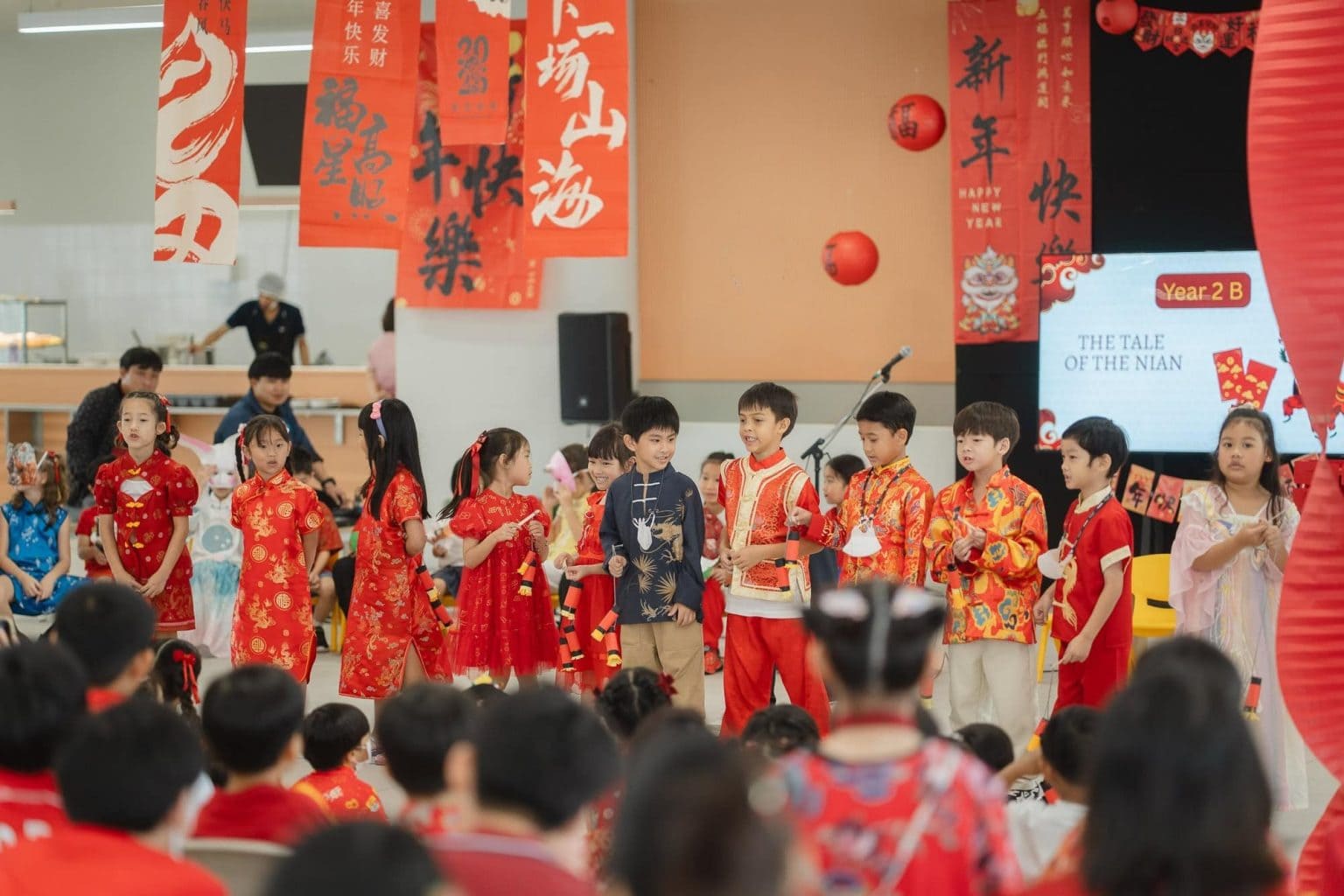
Lunar New Year and the Mid-Autumn Festival, with crafts and food.
- Pinyin
A bridge to reading
The Roman alphabet links what children say to what they read.
Languages at every stage
What each stage adds, from first words in Toddlers to IGCSE preparation in Lower Secondary.
-
Toddlers
Songs, stories and circle time, every day
-
Early Years
Phonics, Thai culture and Mandarin twice a week
-
Years 1 and 2
English, Thai and Mandarin for every child
-
Years 3 to 6
A language pathway, chosen with the teacher
-
Years 7 to 9
Pathways that lead towards IGCSE
-
English support
Children who need it follow English as a Second Language. Progress is assessed regularly and shared with parents.
-
Choosing a pathway
From Year 3, children add Thai or Mandarin, plus a block of Mandarin, English Extension or English Booster, guided by their teacher.
-
Home languages
In Early Years, children sing rhymes and songs in English and in their home languages.
Questions parents ask
-
Is English the language of teaching?
Yes. English is the main language of teaching and learning at SBS Bangkok. Thai and Mandarin are taught as language subjects alongside it.
-
My child is still learning English. Will they keep up?
From Year 1, children who need it follow English as a Second Language, built on the Cambridge framework, with support to join First Language English. Progress is assessed regularly and shared with parents.
-
Does every child learn Thai?
Every child learns Thai in Years 1 and 2, and every child studies Thai culture and history. From Year 3, families choose Thai or Mandarin as a second language. In Lower Secondary, Thai nationals take Thai, and other students take Thai Culture.
-
When does Mandarin start?
In Early Years, specialist Mandarin teachers join inquiry lessons twice a week. From Year 1, Mandarin is taught by specialist teachers and benchmarked to HSK.
-
Can my child change pathway?
Yes. Children can move between English and English as a Second Language as their English develops, and language choices from Year 3 are made with guidance from the teacher.
-
Will my child become bilingual or trilingual?
Our goal is for every student to graduate with fluency or strong proficiency in at least two languages, often three, depending on their background and learning needs.
Hear our languages in action
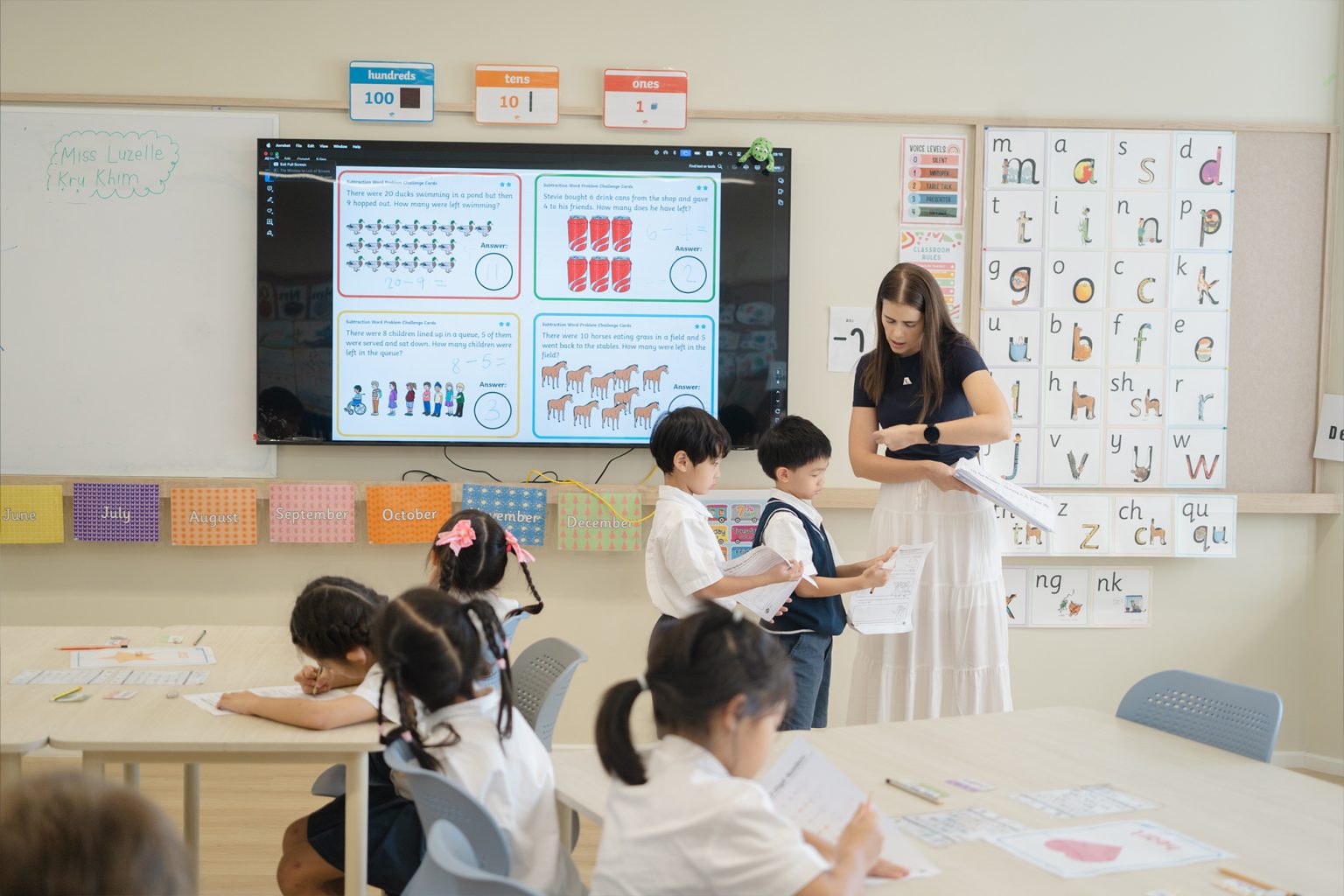
Visit on a school day and see English, Thai and Mandarin lessons in our classrooms.