Why Reading is the Ultimate Superpower for Your Child
Beyond the “digital loop” of scrolling lies a deeper, more powerful way to learn. Discover how SBS Bangkok balances high-tech tools like Raz Kids with traditional reading habits—plus 5 practical tips to raise a lifelong reader at home.

Once upon a time….
In 2026, the digital world is more immersive than ever. Between high-definition gaming, AI-generated content, and the endless ‘scroll’ of social media, our children are bombarded with instant gratification. At SBS Bangkok, we see the value of technology, but as we celebrate Book Week (Monday 16th – Friday 20th March), it is vital to pause and recognise why the humble act of reading a book remains so important for our young learners – especially when reading becomes a shared experience at home.
If we compare the ‘dopamine loop’ of scrolling on a device with the act of reading from a book, there is a significant difference in terms of child development. The former has a high speed shallow focus, whilst the latter is a far deeper experience that is rich in executive functioning (focussed and cognitively demanding). When a child engages with a book, they transition from learning to read to ‘reading to learn’, a shift that fundamentally alters their cognitive and emotional trajectory.
That said, at SBS Bangkok we are not all neo-luddites or technophobes. In fact, in terms of reading comprehension, technology prevails. Our Raz Kids platform provides an extensive digital library of hundreds of interactive, leveled ebooks (29 levels) that allow students in Early Years and Primary School to practice reading anytime, anywhere. The platform improves literacy through a ‘listen, read, and record’ approach, enhancing fluency and comprehension via interactive tools and quizzes.
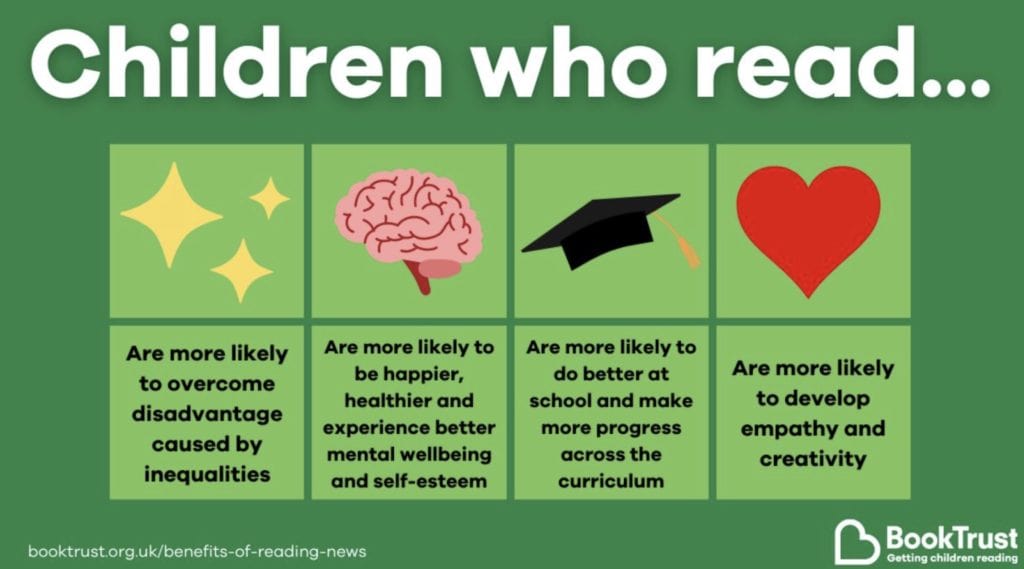
The value and advantages of kids who habitually read are pretty well known. The Book Trust (who provide some excellent advice for parents HERE) sums up the main advantages below:
To support your child’s reading habits at home, consider the following top tips:
- Choice & Display
- Don’t discourage graphic novels or comic books but introduce a rich balance of reading materials rather than one specific genre.
- Give your child permission to stop reading a book if they don’t like it. We suggest a 10 page rule – if they are not hooked after 10 pages then perhaps it’s not the book for them.
- Encourage children to develop their own library (a simple book shelf) and take pride in their collection.
- Creating a Reading Sanctuary
Our Libraries at school have been designed for students to find their ‘nook’ rather than read at a formal desk. This is intentional as we want children to discern between performance reading and reading for pleasure.
Most reading at home should be for pleasure, so the physical environment is important to cue the brain on how to feel and how to prepare for what’s next. Encourage a reading spot that is distinct from where your child does their homework e.g. a beanbag, a pile of pillows or a comfy spot. There is growing research into the benefit of reading aloud to pets – why not get your loveable pooch to become your child’s read-aloud audience!!
- Unplug Devices
Commit reading time to silent reading without distraction. Unplug the TV and hide the Mobile Phone and Ipad. If your child is utilising a device to read then ensure that you regulate their access to other apps and digital temptations. Sometimes being a parent ‘over the shoulder’ helps the child understand your commitment to the task in hand. Reinforce these rules consistently, insistently and persistently.
- Bedtime Reading Ritual
The consistency of a daily routine or ritual provides security for young children. Over time, and as reading proficiency matures, switch bedtime reading routines and roles as follows:
You read to your child > Your child reads to you > Your child reads independently
- Be a Reading Role Model
Children like to learn behaviours from their parents. If we want them to pick up a book, they need to see that we also view reading as a reward, not a requirement. Let them catch you in the act of reading and share your interest in the story or information that you are consuming.
Our Book Week will include activities to inspire a love of reading, including: a Mystery Reader series; a Literacy League Launch (Secondary Buddy Reading Programme); DEAR Time (Drop Everything & Read); Author workshops; and a Book Day Parade to conclude on Friday.
As we throw ourselves into each activity at school and at home, let’s remember that in encouraging them to read we are handing our children the keys to the ultimate superpower. Enjoy the experience!
 Insights
Why Reading is the Ultimate Superpower for Your Child
Beyond the “digital loop” of scrolling lies a deeper, more powerful way to learn. Discover how SBS Bangkok balances high-tech tools like Raz Kids with traditional reading habits—plus 5 practical tips to raise a lifelong reader at home.- SBS Bangkok Events
Christmas Celebratory Performances 2025: A Warm Celebration of Joy and Confidence
A joyful Christmas celebration at SBS International School Bangkok, where students from Toddlers to Year 8 shared heartfelt performances that reflected confidence, creativity, and the spirit of a caring school community. - News
Student Achievement Spotlight: Pichcha (Year 7) Shines Across International Dance Competitions
Pichcha (Year 7) achieved outstanding success across three major international dance competitions in 2025, earning multiple first-place awards, gold prizes, scholarships, and international invitations—showcasing exceptional discipline, artistry, and passion on the global stage.